AI in Healthcare: Real Uses vs. Science Fiction
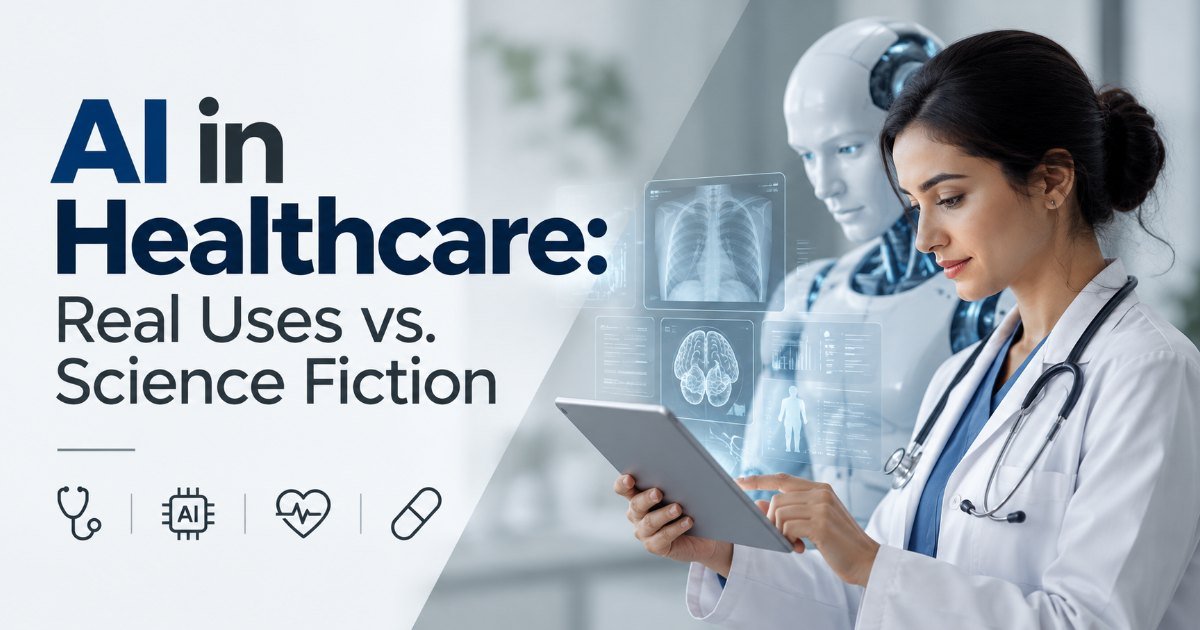
Here's the thing — most of what you've read about AI in medicine is either pure hype or pure fear. Neither is true. The reality is messier, more interesting, and honestly more useful.
I've been following this space closely enough to see the pattern: a new AI breakthrough hits the news, everyone panics or celebrates, and six months later the actual impact on a clinic near you is... somewhere between modest and quietly transformative. Let's cut through the noise.
Where AI in Healthcare Actually Works Right Now
The honest answer is narrower than you'd expect. AI isn't replacing your doctor. It's doing the boring, repetitive, high-volume work that humans are terrible at and that burns out good clinicians.
Radiology is the poster child for a reason. Google's DeepMind and several FDA-cleared systems now flag potential cancers in mammograms and CT scans. In 2023, a study published in Nature Medicine showed an AI model detecting breast cancer earlier than radiologists in a multi-country trial. That's not sci-fi — that's already deployed in hospitals across the UK and parts of the US. The catch? It's a second reader, not a replacement. Doctors still make the call.
Drug discovery is where the biggest wins are happening. Insilico Medicine used generative AI to identify a potential new drug for fibrosis in roughly 18 months — a process that traditionally takes 4-6 years. That's not a typo. They've since advanced candidates into clinical trials. Traditional pharma companies are now partnering with AI startups at a pace that would have seemed absurd five years ago.
Triage and chatbots are everywhere, and mostly invisible to you. Babylon Health (before its well-publicized troubles) and Ada Health run symptom-checking tools used by millions. They're not perfect — nobody claims they are — but they're reducing the load on NHS call centers and ER waiting rooms. When you get an automated "call us if it's urgent" message after describing your symptoms, that's likely an AI making a rough call so a human can focus on the genuinely urgent cases.
The Hype That Isn't Real (Yet)
Let me be direct about this, because I'm tired of the hand-waving.
AI is not diagnosing complex, rare diseases from a photo of your iris. Anyone selling you that is selling you something, usually supplements or a subscription. The data simply isn't there.
AI surgeons aren't a thing. Robotic surgery systems like the da Vinci have been around for decades — they're tools that extend a human surgeon's hands, not autonomous agents. The "robot does the surgery alone" narrative is Hollywood.
The privacy problem is real and unsolved. Training a useful medical AI requires millions of patient records. Every major healthcare AI company has faced questions about how that data was obtained and whether patients actually consented. The UK's NHS data-sharing controversy in 2023 is just the most visible example. If a company won't tell you where their training data came from, be deeply skeptical.
What You Should Actually Watch
If you're a patient, the practical takeaway is simple: AI is most likely to touch your healthcare through faster test results, shorter wait times for routine issues, and maybe a more thorough scan. If you're working in the field, the skills that matter are data literacy and knowing how to validate an AI tool's output — not assuming it's magic.
My honest recommendation? Get your care from humans, but welcome the help. The best AI systems in healthcare aren't the flashiest ones — they're the ones that quietly make a radiologist's workday 15% easier or flag a drug interaction before it reaches your pharmacy counter.
Key Takeaways
- AI in healthcare is strongest in radiology, drug discovery, and administrative triage — not in replacing doctors.
- Real-world systems are second readers, not autonomous decision-makers. Human judgment still calls the shots.
- The biggest near-term impact is faster diagnostics and reduced wait times, not sci-fi surgery.
- Data privacy and consent remain the field's biggest unresolved ethical challenges.
- Be skeptical of any claim that AI can diagnose serious conditions from a selfie or an at-home test.
Frequently Asked Questions
Is AI in healthcare worth it in 2026? Yes, but selectively. The systems that work are narrow — they do one specific task well, like reading an X-ray or screening for diabetic retinopathy. Broad, general-purpose medical AI is still years away. If a tool promises to do everything, it does nothing well.
How accurate is AI diagnosis really? For specific, high-volume tasks like detecting certain cancers in imaging, accuracy now rivals or exceeds human specialists in controlled studies. But those studies are narrow. Real-world performance drops when you move to different populations, different equipment, or rarer conditions. Always ask what specific task was tested — not "AI diagnosis" in the abstract.
Will AI replace doctors? Not in any timeframe that matters. The more realistic model is augmentation: AI handles the repetitive reading and flagging, doctors handle the judgment, conversation, and the parts of medicine that actually require being a human being. If anything, good AI makes doctors more valuable, not less — because it frees them to do the work only they can do.
Is my medical data safe with AI companies? It depends on the company, and the honest answer is that safeguards are still catching up. The most trustworthy players are those partnered with established health systems under clear data-sharing agreements, not standalone apps that scrape or purchase data on the open market. Read the privacy policy, and if a service won't tell you where its data comes from, don't use it.
How did this story feel?
Be the first to react
Written by
TechPulse Team
The TechPulse editorial team publishes clear, practical technology guides. Every article is original and written to be understood — not just skimmed.
Comments (0)
No comments yet — start the conversation!
Keep reading
Why Data Quality Matters More Than the Algorithm
Your model passed every test. The data didn't. Why data quality matters more than the algorithm, with real examples from Tay to retail and healthcare models.
How Chatbots Remember — And the Mistakes You're Making
You're three messages into a chat with an AI assistant. You tell it your dog's name, your goto coffee order, and the deadline for that big project. You close…
Machine Learning Basics Without the Math Panic
You don't need advanced math to understand machine learning. Here are the mistakes most beginners make — and what to focus on instead.