
How Much RAM Does a Phone Need in 2026? A Real-World Checklist
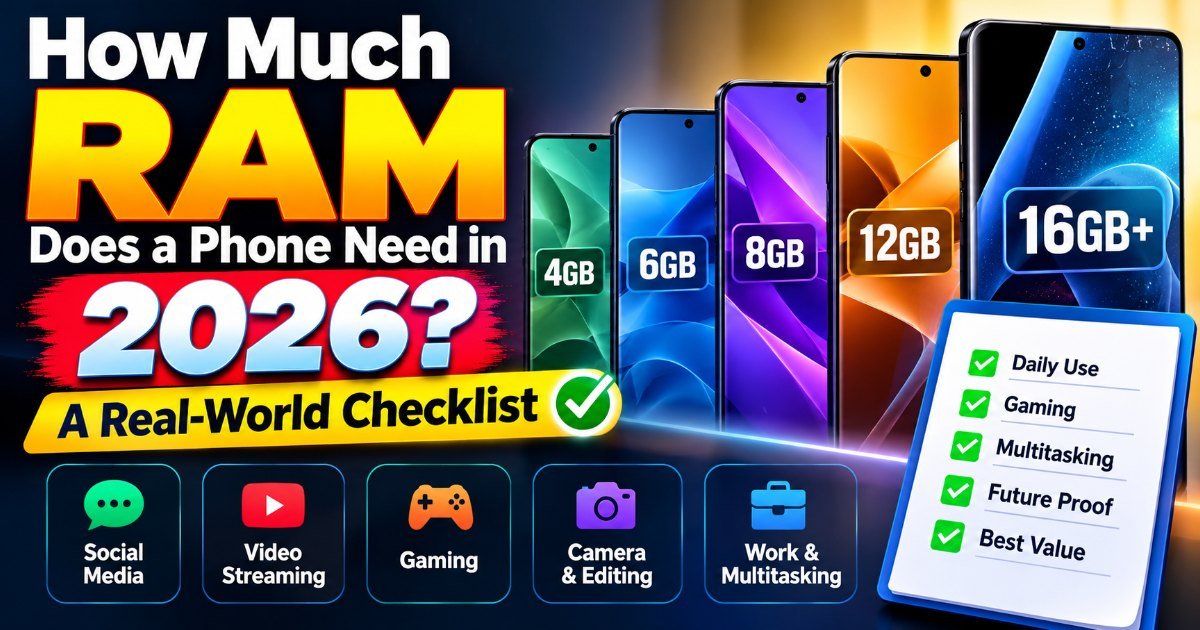
You just paid extra for the 16GB model. Six months in, your phone still feels sluggish — so what gives? (Spoiler: it's probably not the RAM.) The truth is most people buy more memory than they'll ever use, while a handful buy too little and suffer for it. So how much RAM does a phone need, really? Here's the honest breakdown.
How Much RAM Does a Phone Need? The Short Answer
Eight gigabytes is the floor in 2026 if you want your phone to feel smooth. Twelve is comfortable for most people and gives you breathing room for the next couple of years. Sixteen and above? That's a power-user purchase — gaming, heavy multitasking, or those new on-device AI features that chew through memory like popcorn.
But here's the thing most spec sheets won't tell you: how the software uses that memory matters just as much, and that's where the two big ecosystems diverge.
Android vs. iPhone: the great RAM divide
If you're shopping on Android, you'll see flagships proudly boasting 12GB, 16GB, even 24GB. Great. Meanwhile, the latest iPhones ship with 6 to 8GB. And yet, in day-to-day use, they often feel just as fast — sometimes faster.
Why? Apple controls the chip, the OS, and every app in its store, so it can squeeze far more out of less memory. Android has to be conservative, because it runs on dozens of hardware configurations from a dozen makers. It's not a fair comparison, and pretending it is does both platforms a disservice.
So when someone tells you an iPhone "only" has 8GB, take that with a grain of salt. You can't compare RAM numbers across ecosystems like-for-like. (This is the single most misleading thing about phone specs, and it drives me a little crazy.)
What RAM actually does for you
RAM is your phone's short-term memory. It's what keeps your open apps, active tabs, and current tasks ready to go. When you run out, the phone starts killing background apps, reloading screens, and you feel it as stutter and lag.
What it isn't: storage. That 256GB or 1TB you also see on the spec sheet? That's where your photos, apps, and files live permanently. Bigger storage won't make your phone faster. Confusing the two is how people end up paying $200 extra for the wrong thing.
The real question: how do you use your phone?
This is where the checklist actually starts. Think about your average day:
- Casual user — messaging, social media, streaming, the occasional photo. 6 to 8GB is fine, and you probably won't notice the difference going higher.
- Heavy multitasker — switching between work apps, a video call, a document, and music. 12GB keeps everything alive and saves you those annoying reloads.
- Mobile gamer or creator — high-frame-rate games, video editing, lots of tabs. 16GB or more is genuinely worth it here.
- AI features — the new on-device photo editing, live translation, and summarization tools are memory-hungry. If your phone supports these well, it's almost certainly packing 12GB+.
Be honest about which you are. Most readers fall into the first two categories. The third and fourth are where the premium RAM pays off.
Should you pay for more?
My take: for the average person, 12GB is the sweet spot in 2026. It's where comfort meets value, and it gives you a couple of years of headroom before apps catch up.
Skip the 8GB if you can find it at a small premium — the gap is real and it shows up in the second year, not the first. But don't feel pressured into 16GB unless you game, edit video, or you're the type who keeps twenty tabs open and resents when anything reloads.
One more thing: buy storage for the long term and RAM for how you use it today. They serve different jobs, and optimizing for one doesn't help the other.
Key Takeaways
- 8GB is the practical minimum in 2026; anything less is a budget compromise you'll feel within a year.
- 12GB is the sweet spot for most people — comfortable now, still fine in 2028.
- iPhone and Android RAM numbers aren't comparable. Software efficiency matters as much as the count.
- RAM keeps apps alive; storage keeps your files. Don't confuse them when you're choosing a model.
- 16GB+ is for gamers, creators, and heavy AI-feature users — not for average daily use.
- Buy the RAM that matches how you actually use your phone, not the number on the biggest spec sheet.
Frequently Asked Questions
Is 8GB RAM enough for a phone in 2026?
Yes, for most people — barely. It handles messaging, streaming, social media, and light multitasking fine, but you'll notice apps reloading in the background after a year or two as apps get heavier. If you're keeping the phone for three years or more, 12GB buys you real peace of mind for a modest premium.
Is 12GB RAM worth it on a phone?
If you multitask, play games, or plan to keep your phone past 2028, yes. The extra memory keeps background apps alive, reduces reloads, and future-proofs you against app bloat. For casual users it's nice-to-have rather than essential, but the price gap has shrunk enough that it's hard to argue against.
Does more RAM make a phone faster?
Not directly. More RAM doesn't clock your processor faster or boost benchmark scores in any meaningful way. What it does is let more apps stay open without reloading, which feels like speed in daily use. If your phone is slow because of a weak chip or thermal throttling, adding RAM won't fix that.
How did this story feel?
Be the first to react
Written by
TechPulse Team
The TechPulse editorial team publishes clear, practical technology guides. Every article is original and written to be understood — not just skimmed.
Comments (0)
No comments yet — start the conversation!
Keep reading
How Phone Camera Processing Works: Inside a Real Camera App
You're at a concert. The stage lights are a mess — deep blues, harsh reds, and the singer's face lost in shadow. You raise your phone, and the screen shows…
Phones Without Chargers: What You Actually Lose (and Gain)
You unbox a new phone, peel the plastic, and reach for the charger. It's not there. Again. This is the reality of phones without chargers in 2026 — it's been…
How Much RAM Does a Phone Really Need?
You're on the 7:15 train, juggling three apps at once — Slack pings, your calendar reminder pops, and you're drafting an email. Your phone stutters. Again. So…