
Flagship vs Mid-Range Phones: Where the Money Goes
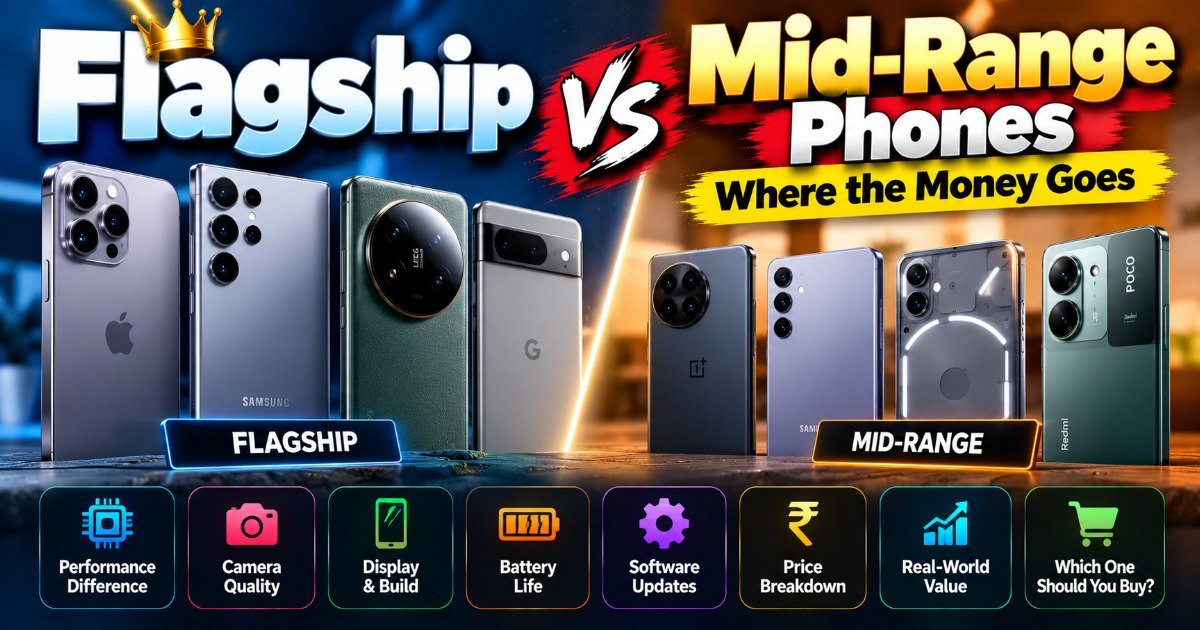
You're standing in front of two phones. One costs $1,199. The other, $449. They both have a bright screen, a camera you'd be happy with, and they'll all run the apps you actually use. So where does the extra $750 go? That's the question at the heart of the flagship vs mid-range phones debate, and 2026 is about as good a year as any to answer it honestly.
Here's the short version: less of it goes into the parts you can hold than you think.
What Changed in 2026
A lot, actually. The biggest shift is that the parts that used to separate flagships from everything else have stopped being exclusive. High-refresh-rate OLED screens, glass builds, fast charging, solid water resistance — these were flagship hallmarks five years ago. Now they're standard on plenty of $300 phones. That's great for your wallet, and it means the premium is concentrated in fewer places than it used to be.
The second big change: the performance gap collapsed. Mid-tier chips this year handle gaming, multitasking, and even on-device AI tasks respectably. You don't need a flagship processor to have a smooth day. (I've said this before, and I'll say it again: the person who needs the absolute fastest phone is rarer than the marketing would have you believe.)
The Chipset Story
This is where the mid-range phone worth it in 2026 question gets its answer. The silicon in a well-chosen mid-range device now covers 90% of what people actually do with their phones. The remaining 10% — sustained 4K video capture, heavy photo editing, the newest AI features — is where flagships pull ahead, but it's a narrow lead.
The catch? Mid-range chips can still throttle under sustained load, and their modem performance sometimes lags. But for everyday use, the difference is smaller than the price gap would suggest.
Phone Camera: Mid-Range vs Flagship
The camera is the trickiest category, because it's where the two tiers still diverge — just not the way they used to.
Hardware-wise, mid-range phones now ship large sensors and fast lenses that genuinely compete. In good light, a $450 phone can take photos that sit right next to a $1,200 one. The differences show up in the places that need computing power: per-zoom quality, low-light video, skin tones that don't look uncanny, and consistent processing across every shot. Flagships still win those, but the margin has shrunk to a few percentage points, not a generation.
If you're the kind of person who zooms in and shoots a lot of night video, the flagship camera earns its keep. If you mostly share to Instagram and text photos to your group chat, you won't miss what you're not paying for.
Flagship vs Mid-Range Phones: Where the Premium Goes
So where does the money actually go? A big chunk funds R&D and design — the stuff that trickles down to cheaper phones years later. Then there's the camera processing pipeline, the AI silicon, the software support commitment (flagships now promise four to seven years of updates, which is real money to maintain), and, yes, the marketing.
The mid-range phone is engineered to a price. It cuts corners you won't notice in daily use and keeps the corners you will. That's not a criticism — it's just a different design philosophy, and it's why the value conversation has gotten more interesting.
Should You Buy a Flagship or a Mid-Range Device?
My honest take: if you're coming from a phone three or more years old, a good mid-range device in 2026 will feel like a huge leap and won't insult your intelligence. If you rely on the best camera, want the newest AI features today, or plan to keep your phone for five years, the flagship earns its keep.
But here's the part that matters — the flagship is no longer the default safe answer. It's a genuine choice now, and the fact that you even have to ask tells you how far the middle has come.
The Best Budget Phone Conversation
Speaking of which, if you're shopping on a budget, the best budget phone 2026 conversation has gotten crowded in the best way. Brands that used to play only at the top are now competing hard in the $300–$500 band, and the winners aren't the cheapest — they're the ones that feel least like they cut the corners you care about.
Key Takeaways
- The screen, build, and charging gaps between tiers have mostly closed — those are no longer reliable ways to tell them apart.
- Mid-tier processors now handle 90% of real usage; the flagship advantage is concentrated in sustained workloads and AI.
- Camera hardware is effectively tied. Flagships still lead in zoom, low-light video, and processing consistency, but by a small margin.
- Software support is a quiet differentiator: flagships promise 4–7 years, mid-range support varies a lot.
- The flagship premium now buys R&D, AI features, and long-term support more than it buys better everyday hardware.
- If you keep phones 3–4 years and don't chase the best camera, a mid-range device is the smarter buy in 2026.
Frequently Asked Questions
Is a flagship phone worth it in 2026? Only if you need the best camera, the newest on-device AI features, or you plan to keep the phone for five or more years. For most people, the extra money buys marginal gains.
Is a mid-range phone worth it in 2026? Yes — more than it has been in years. A well-chosen mid-range device covers 90% of what people do, and the parts it skips are the ones most users never notice.
What's the real difference between a flagship and a mid-range phone camera? In good light, almost nothing. Flagships pull ahead in zoom, low-light video, and processing consistency — all of which need more computing power than the hardware alone provides.
How much more does a flagship phone actually cost? Roughly $600–$800 more than a comparable mid-range device, though that premium is concentrated in R&D, AI silicon, and software support rather than the physical parts.
How did this story feel?
Be the first to react
Written by
TechPulse Team
The TechPulse editorial team publishes clear, practical technology guides. Every article is original and written to be understood — not just skimmed.
Comments (0)
No comments yet — start the conversation!
Keep reading
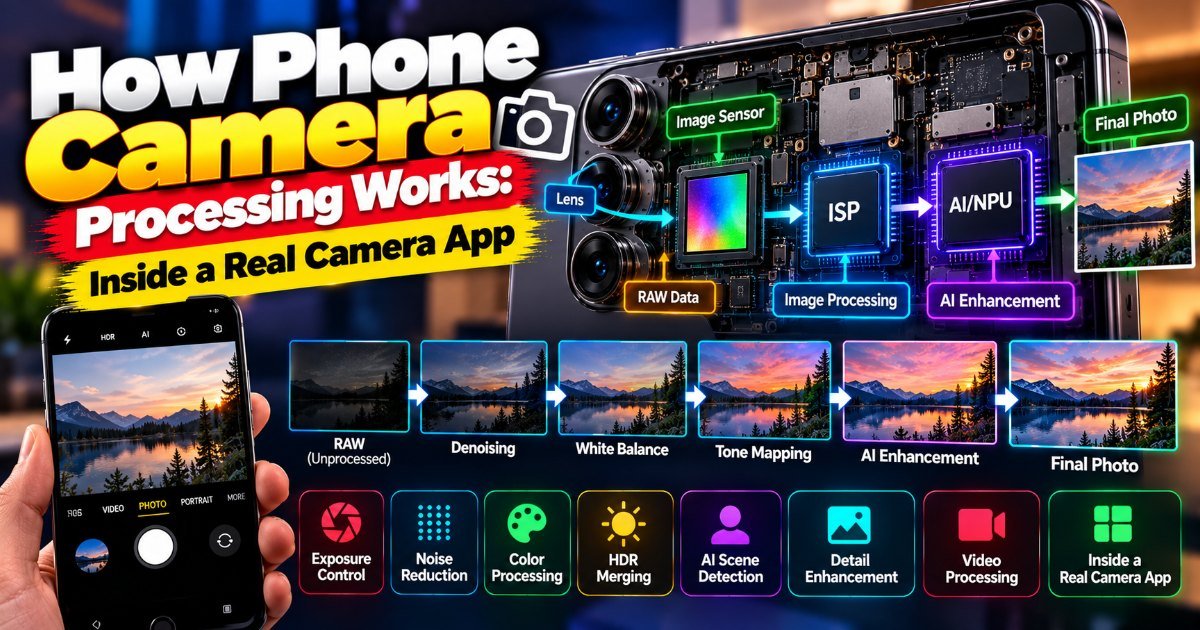
How Phone Camera Processing Works: Inside a Real Camera App
You're at a concert. The stage lights are a mess — deep blues, harsh reds, and the singer's face lost in shadow. You raise your phone, and the screen shows…
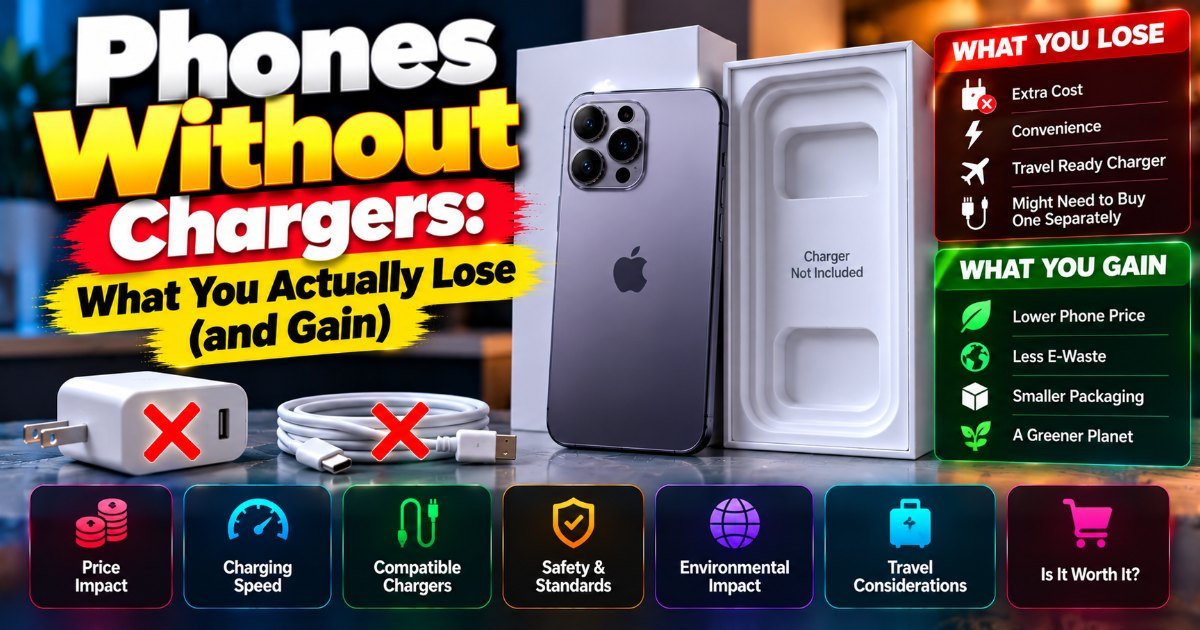
Phones Without Chargers: What You Actually Lose (and Gain)
You unbox a new phone, peel the plastic, and reach for the charger. It's not there. Again. This is the reality of phones without chargers in 2026 — it's been…
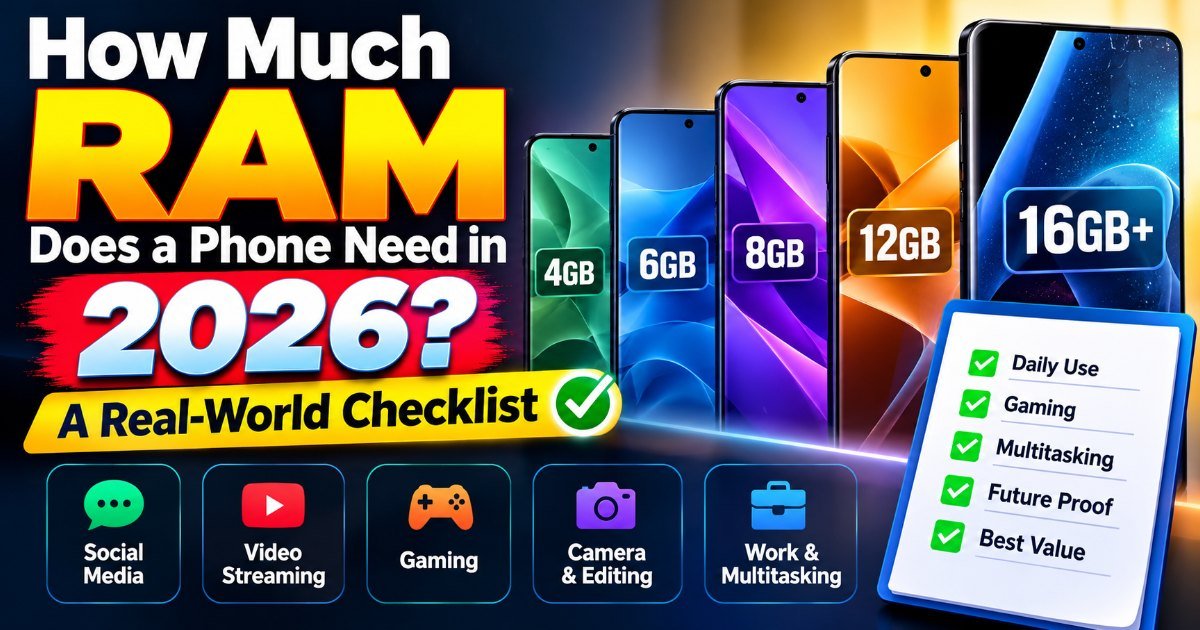
How Much RAM Does a Phone Really Need?
You're on the 7:15 train, juggling three apps at once — Slack pings, your calendar reminder pops, and you're drafting an email. Your phone stutters. Again. So…