
Repairability Scores: What They Actually Mean Before You Buy
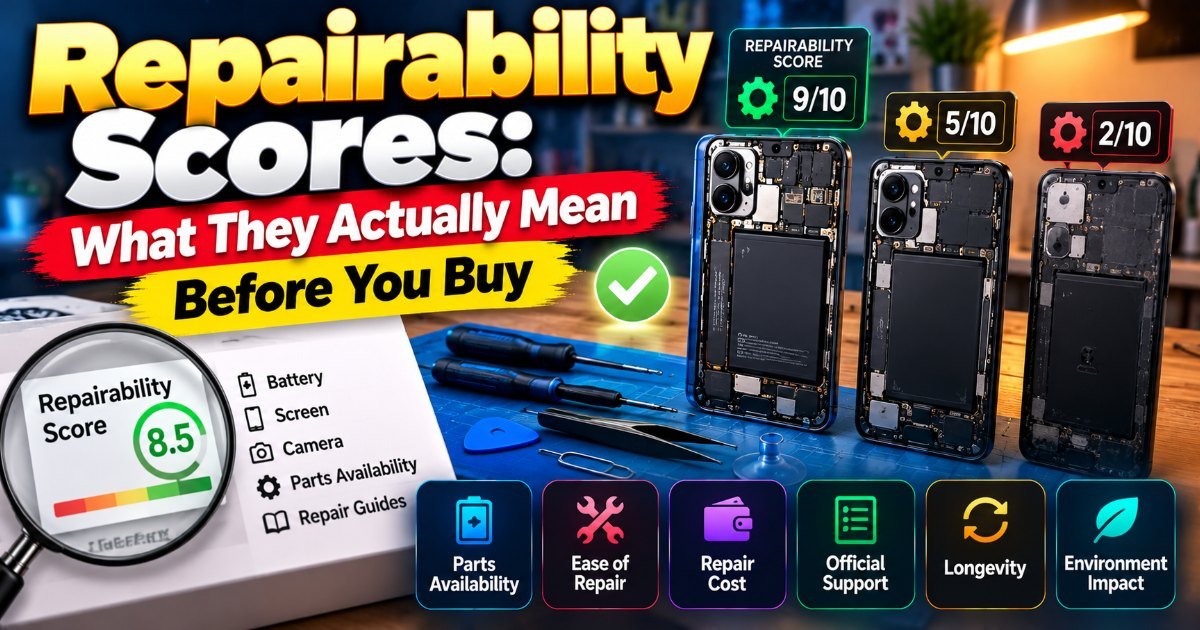
Your phone slips from your hand at the worst possible moment. Screen spiderwebs across the glass. You take it to a repair shop, and the quote makes you question whether it's worth fixing at all. That moment — whether you can open the back yourself or are stuck paying someone else a small fortune — is exactly what repairability scores are trying to predict.
Here's the thing most people don't realize: a repairability score isn't just about how easy it is to swap a battery. It's a holistic look at whether the device is designed to survive the accidents that happen in real life.
What Repairability Scores Actually Measure
The most well-known scoring system comes from iFixit, the California-based repair community that tears phones apart on camera and assigns them a score from 0 to 10. A 10 means the device practically disassembles itself with standard tools. A 0 means it's essentially a glued-shut paperweight.
They evaluate several factors. Can you get inside without heat and patience? Are the screws standard, or proprietary? Is the battery replaceable without destroying the display? Are spare parts actually available from the manufacturer, or do you have to hunt eBay for a used donor phone? Is the repair documented publicly, or are you relying on third-party guesswork?
The score reflects all of that. A phone that scores 8 or above will typically cost you less to repair two years down the line — because parts exist, guides exist, and you (or a local shop) can actually do the job.
Why Repairability Matters for Your Wallet
Let's talk numbers. A cracked screen repair on a flagship phone can run anywhere from $150 to $300 out of warranty. A battery replacement might be $70 to $120. Multiply that over the life of the phone, and you're looking at hundreds of dollars in avoidable costs.
A repairable phone changes that math entirely. With a Framework or a Fairphone, you can order a replacement battery for thirty bucks and swap it in twenty minutes. With a typical flagship, you're at the mercy of the manufacturer's pricing and availability — and when they discontinue a model, you're out of luck entirely.
Here's the part that gets overlooked: repairability extends usable life. If you can fix a phone instead of replacing it, you're not just saving money. You're keeping a perfectly good device out of a landfill, and you're not locked into the next upgrade cycle the manufacturer wants you to chase.
The Right to Repair Changes Everything
Repairability scores don't exist in a vacuum. They're backed by a growing legal movement. The EU's right to repair regulations now require manufacturers to make spare parts and repair information available for years after a product launches. In the US, states like California and New York have passed their own laws, and a federal right to repair push keeps gaining momentum.
This matters for you as a buyer because it means the repairability score of today is increasingly backed by enforceable law, not just good intentions. A phone that scores poorly today might still be repairable tomorrow — but only if the manufacturer is legally required to keep supporting it.
Popular Phone Repairability Compared
Here's where it gets practical. Among the phones people actually buy, the spread is dramatic.
- High scorers (8–10): Framework's modular Android phone, Fairphone 4 and 5, and several Motorola mid-range models. These are built with repair in mind from day one. Screws, not glue. Publicly available repair guides. Parts you can order directly.
- Mid-tier (5–7): Recent iPhones have improved — the iPhone 14, 15, and 16 series score higher than their predecessors because Apple finally made battery and display repairs feasible without destroying the device. Google's Pixels sit in a similar range: repairable, but not effortless.
- Low scorers (0–4): Most Samsung Galaxy flagships, Nothing Phones, and many Chinese-brand flagships. Glue, proprietary screws, displays fused to the frame. They're beautiful devices, but when something breaks, you're at the manufacturer's mercy.
The tradeoff is real. The most repairable phones tend to be mid-range or niche. The best-performing flagships often score mediocre on repairability. You're choosing between raw performance and long-term resilience (and honestly, most people overestimate how much raw power they need after year two).
Key Takeaways
- Repairability scores predict how much you'll pay to fix a phone when it breaks — and whether you'll even be able to.
- iFixit's 0–10 scale is the most visible benchmark, but it reflects a deeper design philosophy about how devices should be built.
- A repairable phone saves money over its lifetime and keeps e-waste down, even if it means compromising on some flagship features.
- The right to repair movement is turning repairability from a nice-to-have into a legal requirement in many regions.
- If repairability matters to you, look at Framework, Fairphone, or Motorola's repair-focused lineup before committing to a glued-together flagship.
- Check the score before you buy, not after — once you've committed to a device, your repair options are locked in.
Frequently Asked Questions
What is a repairability score and why does it matter? A repairability score rates how easy a device is to open and fix, typically on a 0–10 scale. It matters because it predicts whether you'll be able to repair your phone affordably when it breaks — or whether you'll be forced to replace it entirely.
Is iFixit repairability score reliable in 2026? Yes, iFixit remains the most transparent and widely cited repairability benchmark. They publish full teardown videos and explain their scoring, so you can see exactly why a phone got the score it did. Just remember it's one perspective — other organizations are building their own standards too.
Which phone brand has the best repairability? Brands like Framework and Fairphone lead with near-perfect scores because they design for disassembly from the start. Among mainstream options, Motorola has several models that score well, and Apple has improved significantly with its recent iPhones. Samsung and Nothing still lag behind.
How did this story feel?
Be the first to react
Written by
TechPulse Team
The TechPulse editorial team publishes clear, practical technology guides. Every article is original and written to be understood — not just skimmed.
Comments (0)
No comments yet — start the conversation!
Keep reading
How Phone Camera Processing Works: Inside a Real Camera App
You're at a concert. The stage lights are a mess — deep blues, harsh reds, and the singer's face lost in shadow. You raise your phone, and the screen shows…
Phones Without Chargers: What You Actually Lose (and Gain)
You unbox a new phone, peel the plastic, and reach for the charger. It's not there. Again. This is the reality of phones without chargers in 2026 — it's been…
How Much RAM Does a Phone Really Need?
You're on the 7:15 train, juggling three apps at once — Slack pings, your calendar reminder pops, and you're drafting an email. Your phone stutters. Again. So…